Buying your first car is an exciting milestone, but it can also feel overwhelming because there are many different models, prices, features, and financing options to consider. The best first car is not necessarily the most expensive or most powerful model. It should be a vehicle that matches your actual needs and remains affordable throughout the ownership period.
Start With a Realistic Budget
Before looking at specific vehicles, determine how much you can comfortably spend. The purchase price is only one part of the total cost of owning a car.
You should also consider monthly payments, insurance, fuel or electricity, maintenance, registration, taxes, parking, and unexpected repair expenses. Choosing a vehicle that leaves some room in your monthly budget can make ownership much more manageable.
Choose a Car That Matches Your Lifestyle
Think about how you plan to use the vehicle most of the time. Drivers who mainly commute through busy city streets may prefer a compact car because it is easier to park, usually more fuel-efficient, and often less expensive to maintain.
If you regularly travel with several passengers, children, equipment, or large amounts of luggage, a larger sedan, SUV, or MPV may provide more practical interior space.
Your regular driving environment should also influence your decision. City driving, highway commuting, long-distance travel, and rural roads can place very different demands on a vehicle.
Compare Fuel and Energy Efficiency
Fuel or electricity costs can become a significant part of your monthly expenses. When comparing cars, look beyond the purchase price and check how efficiently each vehicle uses energy.
A slightly more expensive vehicle with better efficiency may cost less to operate over several years. Hybrid and electric vehicles may also be worth considering depending on your driving habits and access to charging facilities.
Review Safety Features
Safety should be an important consideration for every first-time car buyer. Modern vehicles may include features such as multiple airbags, anti-lock braking systems, stability control, blind-spot monitoring, automatic emergency braking, parking sensors, and reversing cameras.
Different models and trim levels may offer different safety equipment, so review the specifications carefully. Independent crash-test ratings can also provide useful information when comparing vehicles.
Consider Maintenance and Reliability
A vehicle that is affordable to purchase may not always be affordable to maintain. Before making a decision, research typical maintenance costs, replacement part availability, insurance costs, and common reliability concerns associated with the model.
Cars with widely available parts and a strong service network can often be easier and less expensive to maintain over the long term.
Think About Resale Value
Even if you plan to keep your first car for several years, resale value is still worth considering. Some vehicles retain their value better because of strong reliability, demand in the used-car market, or lower maintenance costs.
A vehicle with good resale value may reduce the overall cost of ownership when you eventually decide to upgrade or sell it.
Always Take a Test Drive
Specifications and online reviews can help narrow down your choices, but they cannot fully replace a test drive. During a test drive, evaluate driving visibility, seat comfort, steering feel, braking performance, cabin noise, acceleration, and ease of parking.
Make sure the driver’s seat and controls feel comfortable and that the vehicle provides enough space for your normal passengers and belongings.
Compare Several Models Before Deciding
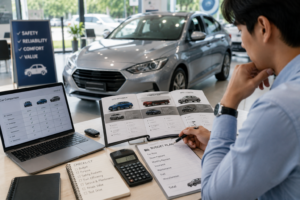
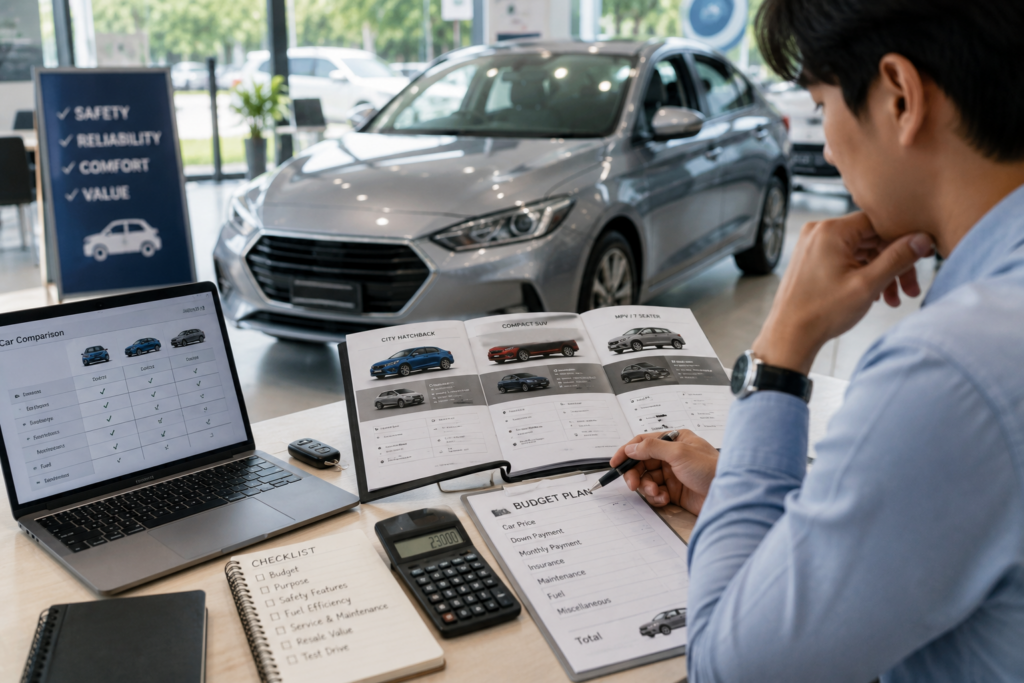
Avoid purchasing the first vehicle you like without comparing alternatives. Create a shortlist of several models within your budget and compare their prices, features, safety equipment, maintenance requirements, efficiency, warranties, and overall ownership costs.
Taking the time to compare your options can help prevent an emotional purchase and make it easier to choose a car that genuinely suits your needs.
Making the Final Decision
Your first car should provide a balance between affordability, reliability, safety, comfort, and practicality. Instead of focusing only on appearance or performance, consider how the vehicle will fit into your everyday life.
With careful budgeting, research, comparison, and a proper test drive, you can choose a first car that is enjoyable to own without creating unnecessary financial pressure.